DETROIT, Mich. (Michigan News Source) – A group conducting an independent review of absentee ballot envelopes, applications, ballots, QVF (Qualified Voter File) records and other materials from Detroit’s 2020 election says it has completed about 40 percent of its analysis of more than 155,000 envelopes. According to the U.S.-based conservative outlet Gateway Pundit, the group reports it is beginning to identify what it describes as concerning patterns in the data.
According to the report, the investigation team – which includes volunteers and non-government election integrity experts – gained possession of nearly 1 million election documents from Detroit through a FOIA (Freedom of Information Act) lawsuit and is manually entering and reviewing absentee ballot envelopes and applications.
MORE NEWS: Henry Ford College Instructor: Huge Mistake Killing Iranian Leader
The group of investigators includes independent researcher Yehuda Miller, Check My Vote founder Phani Mantravadi, and Michigan Fair Elections, along with a team of trained volunteers.
Review flags questionable absentee ballots in Detroit.
So far, their review has flagged multiple absentee ballot envelopes with issues that Gateway Pundit says should have prevented processing. Examples include ballots tied to nonexistent Detroit addresses, questionable timestamps, and instances where handwritten dates on envelopes post-date the official received timestamp.
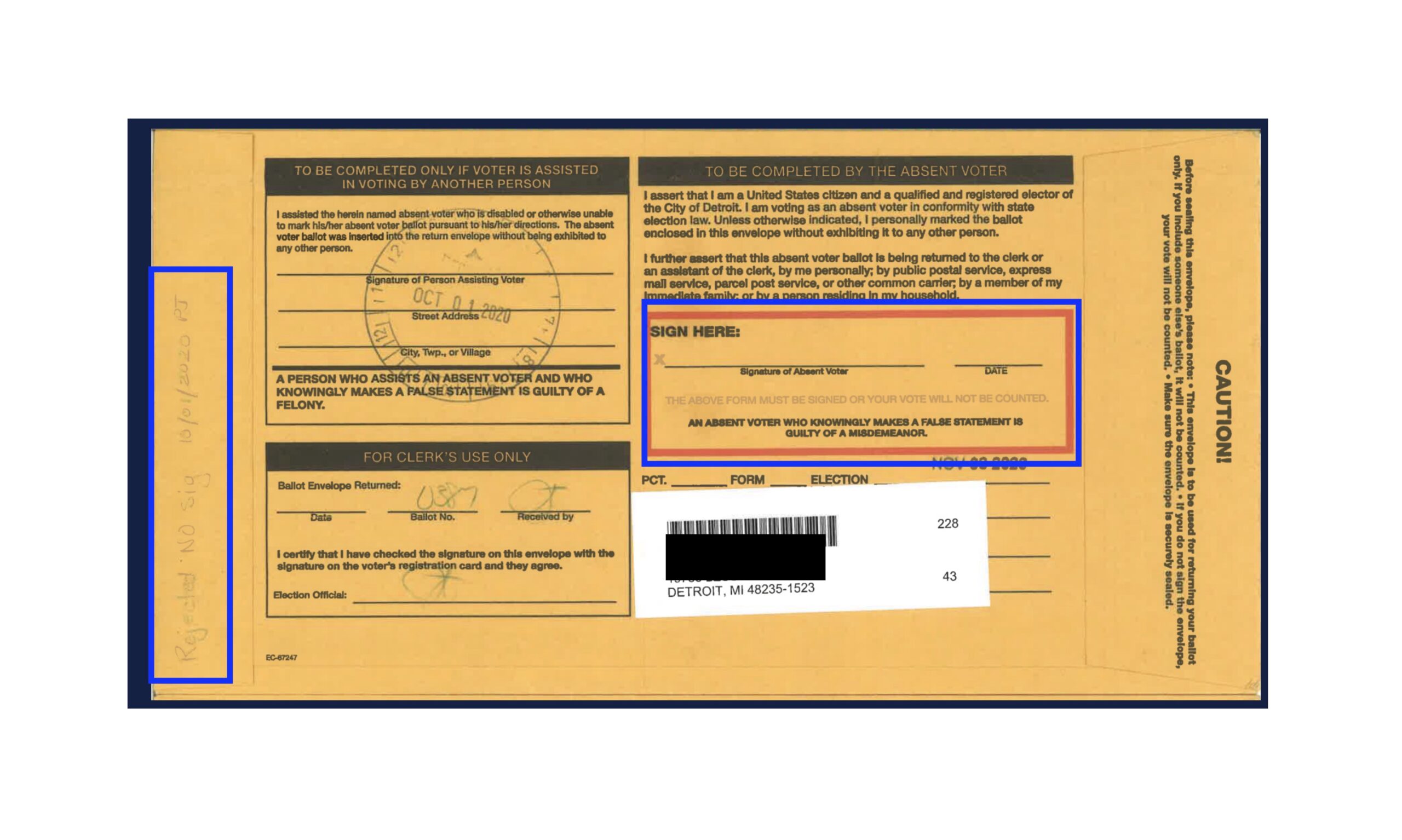
The team also highlighted instances where overseas voters’ ballots were delivered to Detroit addresses despite UOCAVA (Overseas Citizens Absentee Voting Act) rules and instances where ballots marked “rejected” were allegedly recorded as counted in official records anyway.
On the case.
Investigators say more and more findings are emerging as they enter data and are preparing to compare ballot applications to envelopes side-by-side to build a more complete picture. Gateway Pundit contends that the irregularities help explain why Republican challengers were kept from observing absentee processing at the TCF Center in Detroit.
In a recent interview with Patrice Johnson, Chair and Founder of the Michigan Fair Elections Institute, she said that Yehuda Miller’s Freedom of Information Act (FOIA) request was initiated after the 2020 election and ultimately required litigation. She said it “went on for a couple of years before the courts said that the FOIA needed to be fulfilled.” While joking about delays, she stressed the seriousness of the issue: “We’re joking about it, but it really is serious, because the public has a right to this information. That’s part of the transparency that’s so important in terms of keeping a fair and honest government.”
From OCR to oversight: volunteers scale up ballot review.
Johnson described the review process as a “massive undertaking,” particularly because many of the ballot envelope records were provided in digital form requiring optical character recognition (OCR) software. So far, about 180 volunteers have signed up, with 93 trained. “The processing went from a hundred a week to a thousand a week to 10,000 a week,” she said. To ensure accuracy, they brought in a person who used to work for the Department of Defense in an auditing capacity so that “whatever comes out at the end will hold up under scrutiny.”
MORE NEWS: Blended Politics: Trump Supporter Alleges Service Refusal at Smoothie King.
Johnson added that the team is continuing to examine what she called “anomalies that we need to understand better” as the data entry progresses. Once the review is complete, she said, the organization plans to release a public report outlining its conclusions. “Here’s what appears to have gone right. Here’s what appears to have gone wrong,” she explained. The findings will be published and made available in the group’s online report library for public access.
SOS Benson stands by 2020 results.
In contrast to claims raised by election integrity investigators over the years, Michigan Democratic Secretary of State Jocelyn Benson, who is running to be Michigan’s next governor, has said about the 2020 elections in a statement, “Let’s be clear: Michigan’s Nov. 3 general election in Michigan and across the country was the most secure in the nation’s history. There continues to be no evidence of widespread fraud.”