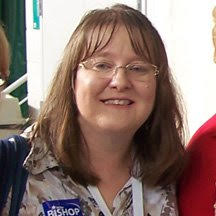
CHARLEVOIX, Mich. (Michigan News Source) – As the United States prepares to celebrate the 250th anniversary of the Declaration of Independence on July 4, 2026, otherwise known as the Semiquincentennial, descendants of the 56 men who signed the document are helping tell the story behind the nation’s founding. One of them lives in northern lower Michigan.
Kim Simpson of Charlevoix didn’t grow up hearing family legends about a famous ancestor. Instead, she discovered it herself while digging through historical records as a genealogist.
From family tree to founding father.
“I’ve been doing genealogy since 1970,” Simpson, 74, said. “In the early 2000s, my cousin and I went down to Ohio to visit her daughter, which is about an hour away from the Ohio Geological Society. And we thought, while we were down there visiting her daughter, we would go visit and investigate.” It was during that investigation that they found the name John Jay Morton, the grandson of John Morton, a signer of the Declaration of Independence and a farmer. She added, “We had never even heard the name John Morton before.” That unexpected discovery sparked a deeper dive into Morton’s history and the family’s connection to the founding father.
Morton, a Pennsylvania delegate, played a pivotal role in American history. According to Simpson, he cast the deciding vote that allowed Pennsylvania to support independence. Had Pennsylvania not voted for the declaration, it would not have passed, Simpson said.
Simpson confirmed with Michigan News Source that she is a sixth great-granddaughter of Morton. She joined the organization “Descendants of the Signers of the Declaration of Independence” (DSDI) in 2023 after years of assembling documentation proving her lineage.
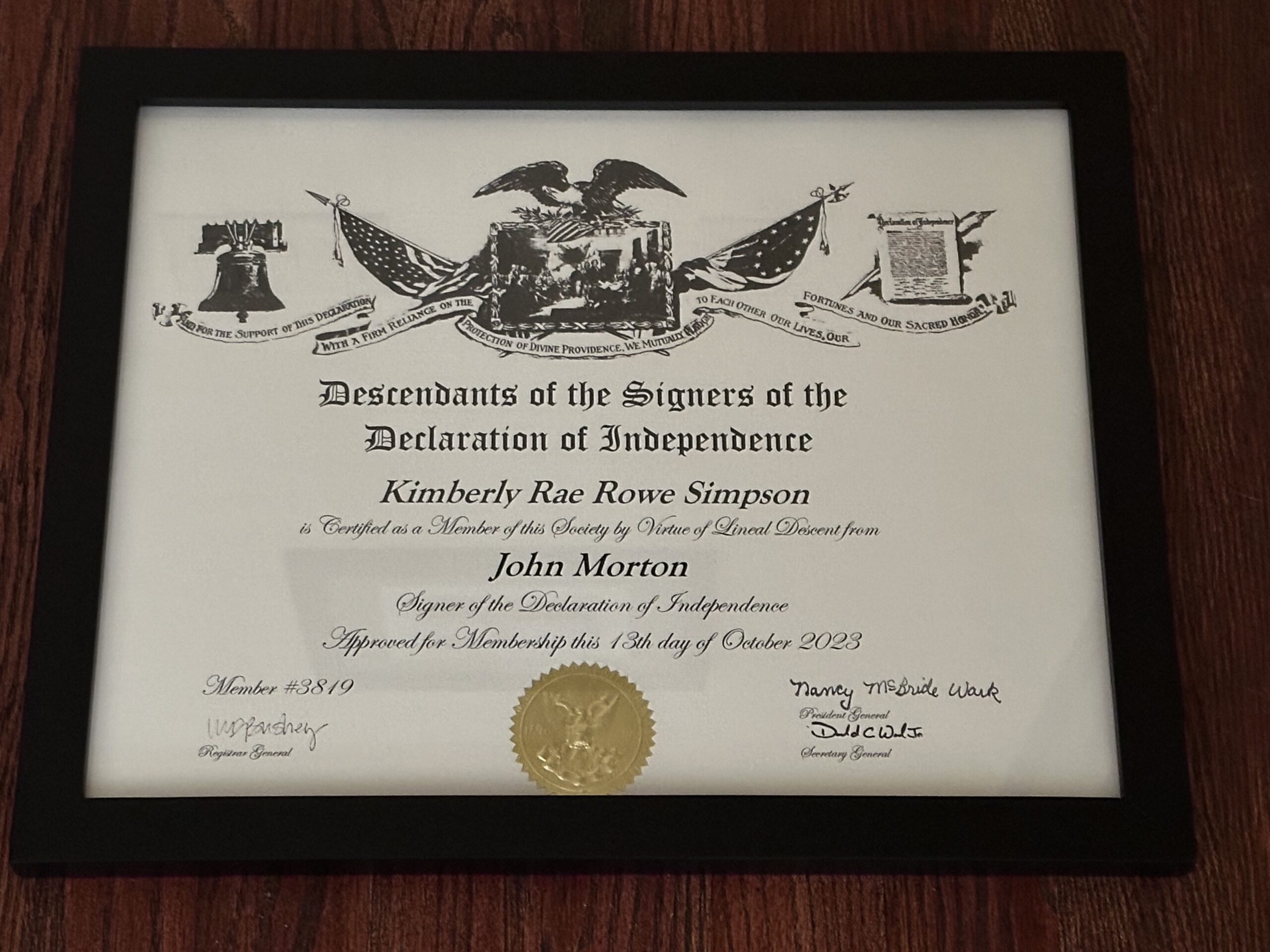
The group is a nonprofit society for people who can prove they are direct descendants of the 56 men who signed the Declaration and are dedicated to preserving their legacy and promoting the principles of the document.
A full list of all of the signers, their occupations, and other information is listed here on the website of the National Archives.
More than just one famous sentence.
Most Americans know only the first part of the second paragraph of the Declaration of Independence where it says “We hold these truths to be self-evident, that all men are created equal, that they are endowed by their Creator with certain unalienable Rights, that among these are Life, Liberty and the pursuit of Happiness…”
MORE NEWS: Michigan Tells Invasive Pests to Get Lost with New Firewood Quarantine
However, the document is largely a detailed case against the British crown. Andy Keller, president general of the DSDI organization, and the eighth grandson of merchant and plantation owner Thomas Nelson Jr. of Virginia, told Michigan News Source that’s often misunderstood.
“The whole point of it (Declaration) was to explain why it was necessary for these 56 individuals to declare that they were fed up with the king,” Keller, 75, said. While the philosophical opening is well known, Keller notes that most of the document is a list of grievances outlining what the colonists believed were abuses by King George III. “They had to go through and list a bunch of different reasons to justify their action,” he explained, adding, “And they had to explain why it was that they wanted to leave the empire and fight the greatest empire in the world to gain their independence.” Those signers took enormous risks and in the document they pledged to each other “our Lives, our Fortunes and our sacred Honor.”
Keller said the connection to a signer of the Declaration of Independence was known in his family, but it wasn’t something he fully understood when he was young. His mother was deeply interested in genealogy and often shared family history, explaining that their line traced back through her grandmother, whose maiden name was Nelson. Because she was born in Nelson County – named for Virginia Governor and Declaration signer Thomas Nelson Jr. – the connection was recognized within the family. Keller said he probably didn’t fully grasp what it meant until he was in high school, when he began paying closer attention to the family research and realized he was a direct descendant. He got introduced to the Descendants group by his aunt who was a member.
Honoring the founders 250 years later.
As the 250th anniversary approaches, descendants of the signers are working with historical groups across the country to commemorate the milestone. Keller said many organizations and even the White House have begun reaching out to the DSDI about ways descendants can participate in upcoming celebrations. Events are expected across the country – from public readings of the Declaration to historical gatherings recognizing the men who signed it. The descendants’ society is also working to recognize the often-overlooked contributions of the signers’ wives, who kept families and farms running while their husbands were away helping create a new nation.
History close to home.
For Simpson, discovering her connection to America’s founding has only strengthened her passion for history. “I don’t move to the next person until I have their story as much as I can get,” she said of her genealogical research. Simpson isn’t satisfied with simply adding a name and a few dates to a family tree. Instead, she digs deeper, determined to uncover the full stories of her ancestors – and it was that commitment to understanding their lives that ultimately led her to uncover her own connection to America’s history.
Two and a half centuries after the Declaration was signed, descendants like Simpson say the document still matters – not just for its famous words, but for the long list of reasons the colonists believed freedom was worth fighting for.