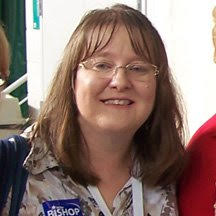
TRAVERSE CITY, Mich. (Michigan News Source) – Before podcasts and influencers filled the airwaves, Ron Jolly had already built a reputation as a steady, prepared voice in Northern Michigan radio. For more than three decades on Northern Michigan airwaves, Jolly, 66, built a career on consistency – logging an estimated 10,000 interviews and putting in hours of prep work every single day. Now, he’s preparing to sign off, retiring alongside longtime producer and on-air partner Colleen Wares McClelland on Friday, April 10.
“The Ron Jolly Show” has long been a Northern Michigan staple – particularly in the Traverse City area – where Jolly broadcasts live each weekday from 7 to 10 a.m.
Discipline behind the mic.
MORE NEWS: Dearborn Sued for Allegedly Favoring Islam Over Christian, Jewish Faiths
Jolly’s approach to radio has always been simple but demanding: know your material and respect your audience. That has meant constant news tracking, evenings spent digging into stories, pulling audio, and shaping the next day’s show on WTCM’s NewsTalk 580. It’s a routine he has never really abandoned – even as the industry transformed around him.
And it has transformed.
In addition to the changes in technology, Jolly said the biggest shift has been the sheer volume and speed of information with 24/7 news feeds in the studio and the internet delivering an endless stream of information, video, and audio. “It’s just a lot more mental work to keep track of it all,” he said.
From Capitol Hill to the control room.
Jolly’s career path wasn’t exactly linear. Before settling into his long-running broadcasting role in Traverse City, Jolly worked as a teenage Congressional page in Washington, D.C., managed Detroit’s Soup Kitchen Saloon, and bounced through multiple radio jobs across Michigan. He did it all – DJ, music director, news anchor – and he even had to answer his own phones.
As for how he got into radio, Jolly said while tending bar at a Detroit hotspot frequented by media sales professionals, he was developing an interest in music and mass communications. At the time, he was attending Wayne State University but was told about the Specs Howard School of Broadcast Arts, which offered an intensive nine-month program – an appealing alternative to spending years pursuing a traditional degree.
That crash course helped drop him into the radio world – but it wasn’t always a smooth ride. In the early days, radio wasn’t automated. It was hands-on and sometimes chaotic.
“We had two turntables and you had to cue up vinyl records, getting one set up as the other one played on-air…you had pretty much three minutes to get things ready from song to song,” he told Northern Express in a past interview. “A couple of times I got mixed up and lifted the needle right off the record people were listening to on-air.”
Finding his voice, but not raising it.
By the time Jolly landed permanently with WTCM in Traverse City in 1994, he had built a wide-ranging skill set – and found his niche. “The Ron Jolly Show” became the go-to show for local listeners, blending national headlines with local stories, Northern Michigan history, and conversations that felt more like discussions than debates. Unlike much of modern talk radio, Jolly hasn’t built his audience by shouting or being offensive.
“I’m not trying to pull people over to think the way I do. I’m just sharing my opinion. I don’t want to offend people,” he said.
From main street to the big names.
That approach helped Jolly build a broad and loyal audience in Northern Michigan, where listeners tend to value connection over confrontation. Over the years, he’s interviewed a wide range of high-profile guests – including Laura Bush, Donald Trump (before he was president), Kirk Gibson, Detroit Red Wing hockey players, and bestselling author Lee Child. But some of his most meaningful conversations didn’t come from big names. They came from everyday people – including talking with kids and a local Vietnam veteran who spoke candidly about his experiences, leaving a lasting impression on both Jolly and his listeners.
Even with a long list of interviews under his belt, there are still a few names on Jolly’s wish list that he hasn’t been able to wrangle an interview with: Mike Rowe, Mick Jagger, Linda Ronstadt, Thomas Sowell, and David Geffen.
Along the way, Jolly has also met a number of notable figures in person. In addition to former First Lady Laura Bush, there was U.S. Sen. John McCain, Lyle Lovett, Rosanne Cash, former Secretary of State James Baker, and Frank Abagnale Jr. – whose life story inspired the film Catch Me If You Can.
Where learning met the airwaves.
Beyond the interviews with the well-known characters, Jolly made a point of spotlighting local and regional people and businesses, carving out a distinctive niche that also blended education with entertainment, including music. Through long-running segments like “Northern Michigan Trivia,” and “Words to the Wise,” he turned learning into something listeners genuinely looked forward to.
“I hope that people have learned things while they’ve listened to me,” Jolly said when asked about his impact on the community and his legacy. “I did a lot on Northern Michigan history. I hope people enjoyed that and learned.”
Behind the scenes, Jolly credits his longevity in part to workplace culture. He described management as supportive but mostly hands-off. “They expect you to come in and do your work but they’re not on top of you,” Jolly said. “They allow you to come in and be creative, be part of the community…It’s an easy place to work because they’re so nice. It really is. People (employees of WTCM) say it’s like family.”
Awards, accolades – and a legacy.
Over the years with WTCM, Jolly has racked up numerous honors, including awards from the Michigan Association of Broadcasters and local recognitions like Traverse Magazine’s “Red Hot” list as a favorite radio personality, reflecting both industry respect and community appreciation. But one of his proudest legacies isn’t a trophy. A pair of listeners launched a journalism scholarship in his name at Hillsdale College with an initial $250,000, challenging others to contribute. The fund has since grown to around $600,000, helping dozens of students and set to continue supporting future journalists for years to come.
What does retirement look like for Jolly?
When asked what retirement might look like, Jolly said it won’t be a sudden stop, but a gradual shift. “I’m not a home improvement guy,” he admitted, “but I do have a lot to catch up on. So there will be painting, there will be fence mending…”
He’s also considering writing another book or two – having already authored Northern Michigan Almanac and Michigan’s Upper Peninsula Almanac. There’s also more travel in his future and plenty of time outdoors, from cross-country skiing and snowshoeing to trail biking and hiking.
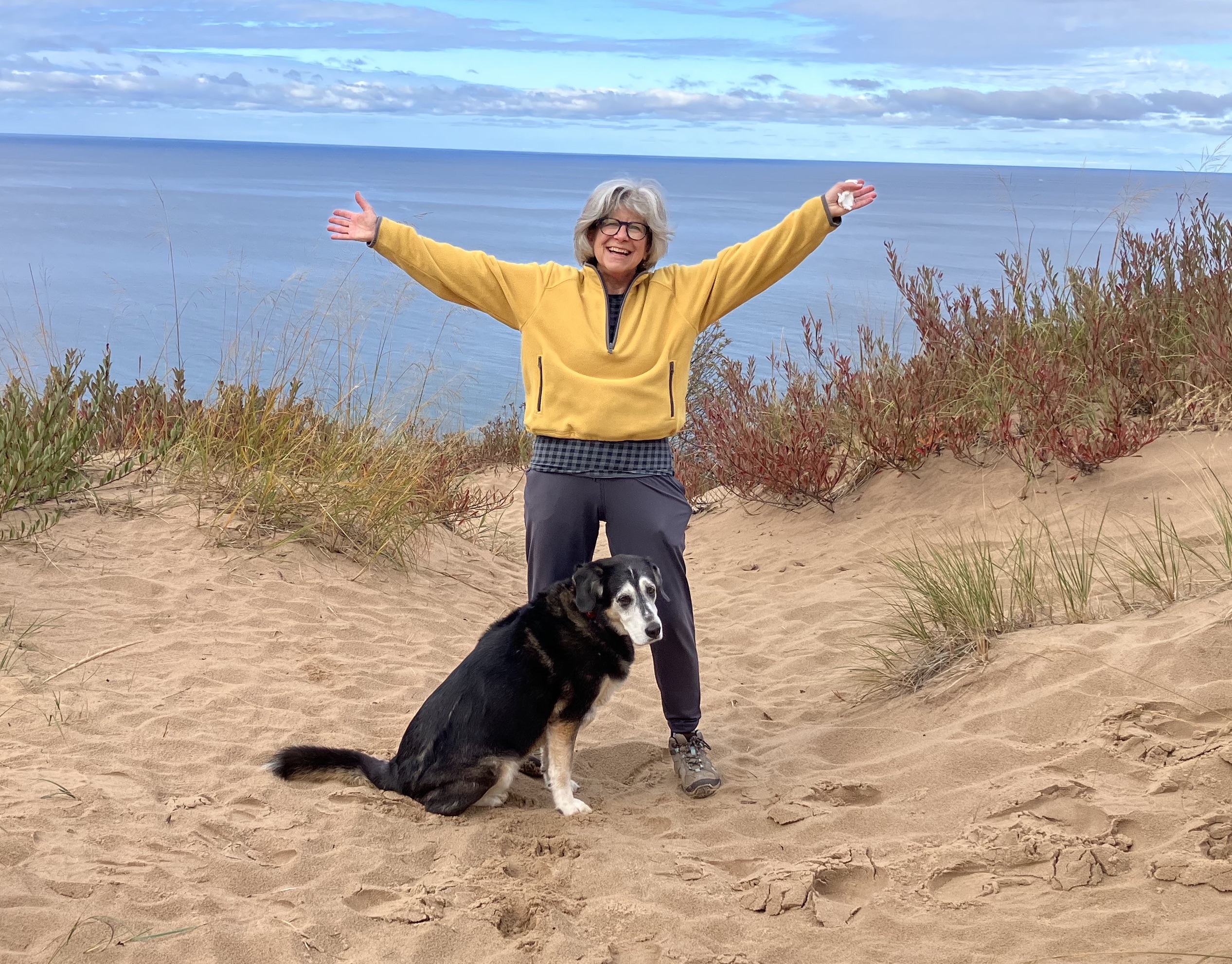
And perhaps most importantly, retirement will mean more time with his wife, Laura, whom he met through work when she was a TV news camera operator and producer. There will also be extra time with their dog, Wrigley, and visits from the exchange students who have stayed with them over the years and continue to return.
Even in retirement though, Jolly doesn’t plan to stay away from the studio entirely. He expects to return to the studio on Thursdays to help the Prout Financial Team with their show “New Retirement Radio.” He will be the producer and board operator and said, “So you might hear me, but I’ll be in the background.”
Plans for Friday.
As retirement approaches, Jolly isn’t planning a big sendoff or a scripted final show. Instead, he’s sticking to what he’s always done – prepare, go on air, and connect with listeners one more time.
“I really don’t have a plan for my last day,” he said. “I don’t know what to expect other than to address our listeners and say thank you and goodbye.”
There’s also a casual meet-up planned after Friday’s show at Middle Coast Brewery from 10 a.m. to 1 p.m. for “whoever wants to stop by.” Jolly may not be planning for a big sendoff, but after more than 30 years behind the mic, Northern Michigan might have other ideas. Because when someone spends decades showing up, doing the work, and building real connections, the community may not let him slip out quietly.