LANSING, Mich. (Michigan News Source) – As Michigan wrestles with growing controversies over massive data centers, another technology-fueled debate is emerging across the state – Flock cameras. Thousands of the automated license plate readers are quietly watching Michigan roads, helping police catch criminals and find missing people while raising increasingly loud questions about privacy, government surveillance and just how much tracking is too much.
If you’ve driven around Michigan lately, there’s a decent chance somebody – or rather, something – has been taking notes. Thousands of automated license plate reader cameras are scattered across the state, quietly photographing vehicles and recording information such as license plates, vehicle descriptions, locations and times.
MORE NEWS: Seven Days vs. 22 Months: Republicans Join Court Fight Over Benson’s Election Records Rule
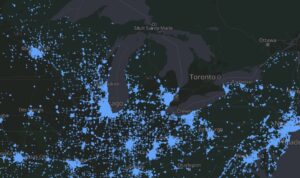
According to Government Technology, more than more than 180 law enforcement agencies use automated license plate readers, primarily supplied by Atlanta-based Flock Safety. There is no official statewide camera count, but the crowdsourced DeFlock database has identified roughly 4,000 Flock and similar cameras in Michigan in 54 of 83 counties. Most are located in the Lower Peninsula, clustered around metro Detroit, Battle Creek, Flint, Grand Rapids, Holland, Jackson, Kalamazoo, Lansing, Muskegon, Saginaw, and Traverse City.
The Good: finding bad guys – and missing people.
Police say the technology can turn hours or days of investigative work into minutes, helping locate stolen cars, suspects and missing people.
And according to Flock Safety’s 2025 Impact Census, the numbers are impressive. Flock estimates its technology assisted in more than 1 million criminal investigations and incidents nationwide in 2025 and played a role in about 20% of cleared cases in jurisdictions using the system. The company also estimates it helped police locate more than 10,000 missing people – about 27 every day – while 42% of surveyed customers said Flock was involved in recovering at least half of their jurisdiction’s stolen vehicles. Those figures, however, come from Flock’s own survey and modeling and should not be confused with independently audited totals.
Helping solve crimes in Michigan.
Flock cameras played a key role in solving the 2024 murder of 72-year-old Hussein Murray in Rochester Hills. Murray was killed after two men allegedly posed as DTE workers to gain entry to his home. Less than 40 minutes after the crime, a pickup truck was found burning in Detroit with its DTE markings removed. According to court records, investigators used the Flock license plate reader system to match the plate on the burned vehicle to the truck used in the crime, helping connect the suspects to the murder. Retired Detroit Police Assistant Chief Steven Dolunt summed it up this way in an interview with WXYZ-Detroit: “That camera system. People complain about it, (but) it just solved the murder.”
In July of 2025, Flock cameras also helped Taylor police crack the shooting death of 14-year-old Trey Kimber. Investigators initially had few leads, but after piecing together surveillance footage, they used Flock’s license plate-reading system to identify a silver Lincoln that had picked up one of the suspects. Police traced the vehicle to its owner and driver, helping investigators identify three 15-year-old suspects. All three were arrested less than three weeks after the killing, and police recovered a weapon during the investigation.
Finding the missing.
Flock cameras have also proven useful when the person being sought isn’t a criminal. In July, an Arenac County family faced what they called “the scariest thing in the world” when their elderly loved one went missing – 73-year-old Gordon Shepard. Authorities were able to use a Flock license plate reader to identify the man’s vehicle and help track him down safely, bringing a frightening search to a relieved ending. The case offered a real-world example of how the same technology used to locate suspects and stolen vehicles can also help police quickly find vulnerable missing people.
MORE NEWS: AG Nessel Takes on Blue Cross Blue Shield, Alleging Illegal Monopoly
Whether people like the cameras or not is often a matter of perspective. Gordon’s daughter, Lindsay, said about the cameras after her dad was found, “I live in Midland, I am from Sterling, and I have never heard of Flock cameras before, now I have, now I really know what they are and I really think they are very useful in this situation.”
The bad: massive surveillance and privacy issues.
The obvious problem is that the cameras don’t just photograph criminals driving by. They photograph everybody. Privacy advocates argue the nationwide network effectively creates a searchable database of Americans’ movements, often without a warrant. Concerns have grown over who can access that information, how widely it can be shared and whether officers can misuse it.
Those fears aren’t entirely theoretical.
Flock CEO Garrett Langley has acknowledged concerns about misuse after reports identified dozens of cases in which officers were accused of improperly using the system, including allegations that some used it to stalk women. The company is now reducing its default data-retention period from 30 days to seven, requiring case codes for searches and rolling out technology designed to flag suspicious searches.
ACLU: not so fast.
However, the American Civil Liberties Union isn’t convinced that Flock’s new safeguards go far enough to address the broader privacy and surveillance concerns surrounding its nationwide camera network. The ACLU says the changes may amount to little more than “window dressing,” arguing loopholes could still allow information to be retained and safeguards circumvented. The organization points to the documented allegations of license-plate-reader abuse involving stalking, wrongful stops and other misconduct.
So Michigan’s Flock debate comes down to a question with no easy answer: how much privacy are people willing to give up for public safety? The same camera network that can help police find a missing child, recover a stolen car or track down a murder suspect can also create a digital trail of where ordinary, law-abiding citizens go. Whether that’s smart policing or a little too much Big Brother depends largely on who’s behind the keyboard – and how much you trust them.