WASHINGTON, D.C. (Michigan News Source) – A conservative watchdog group isn’t letting Democratic U.S. Sen. Elissa Slotkin’s recent comments slide.
The Center to Advance Security in America (CASA) filed a Senate ethics complaint against Slotkin, alleging that her recent remarks about deterring young people from working for the Trump administration amounted to threats. In the complaint, CASA describes itself as a “nonpartisan organization dedicated to improving the safety and security of the American people.”
MORE NEWS: Michigan Native Freed From Russian Prison After Trump’s Call to Putin
CASA is asking Senate Ethics Committee Chairman James Lankford, R-Okla., and Vice Chairman Chris Coons, D-Del., to investigate whether Slotkin’s remarks violated Senate ethical standards.
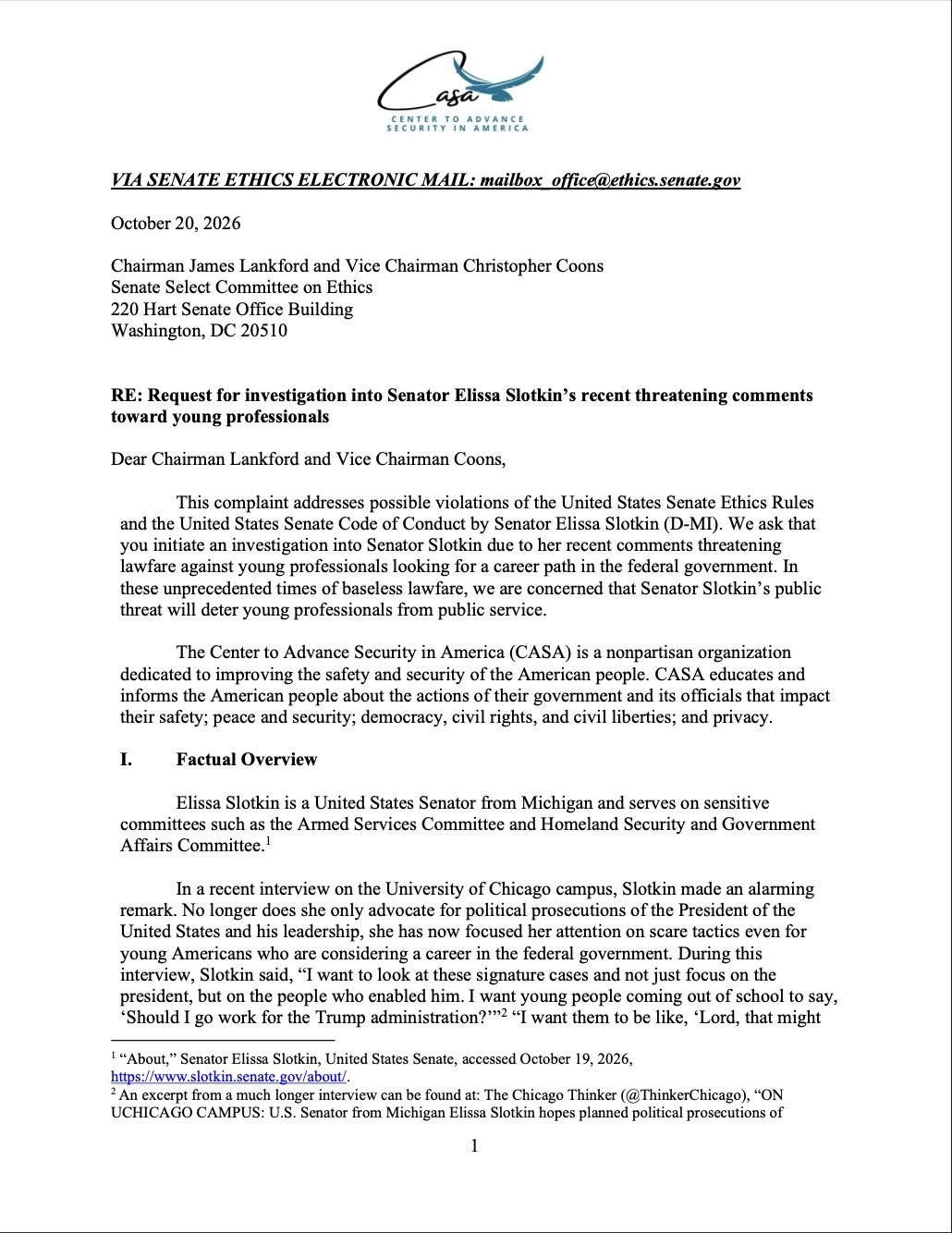
Slotkin’s remarks at the University of Chicago on Oct. 13 drew sharp backlash. Discussing accountability for the administration, she said she wanted to focus not only on President Donald Trump but also on the people who “enabled him.” She said she wanted a “deterrence message sent” so young people considering working for Trump would worry about the potential consequences.
CASA Director James Fitzpatrick told Michigan News Source, “Senator Slotkin’s recent threats aimed at deterring young professionals from entering government service are shameful, unethical, and worthy of investigation.”
He added, “Those with a platform as large as Slotkin’s should be encouraging young people to get involved in government service. Instead, Slotkin is attempting to intimidate an entire segment of young people from serving based on their political beliefs.”
Slotkin has defended her remarks, saying she was calling for accountability for corruption and illegal conduct rather than targeting people because of their political affiliation. Slotkin did not provide evidence supporting that allegation in her post. Her office said the circulating clip omitted the question that prompted her response.
The complaint does not establish that Slotkin violated Senate rules. If the Ethics Committee finds a violation, it could issue a letter of admonition or recommend further discipline. Censure requires a majority vote of the Senate, while expulsion requires a two-thirds vote. The committee could also dismiss the complaint.